10 Must-Have SaaS Tools for Startups in 2026
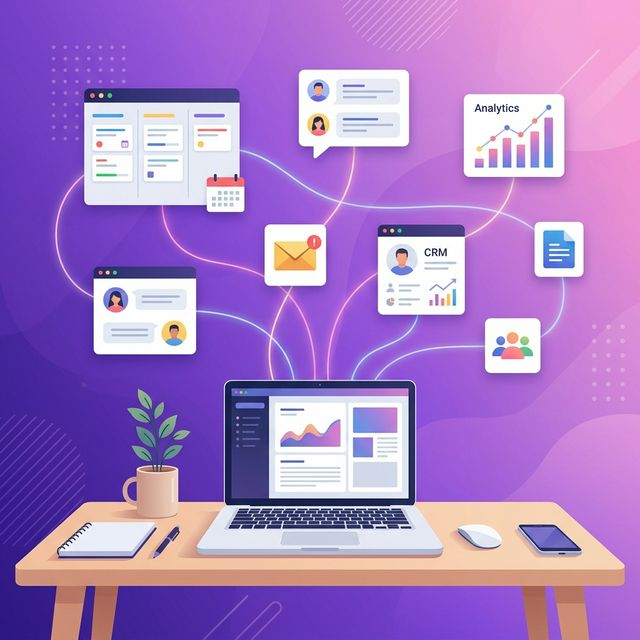
Why Your Tool Stack Can Make or Break Your Startup
In the early days of building a startup, every decision matters — and few decisions have as much long-term impact as the software tools you choose. The right tech stack can automate tedious tasks, streamline collaboration, and give you insights that drive faster growth. The wrong one? It creates technical debt, frustrated teams, and wasted budget that you simply can't afford.
The good news is that 2026 has brought an explosion of powerful, affordable SaaS tools — many available as lifetime deals on platforms like OhMySaaS. Here's our curated list of the 10 categories you absolutely need covered.
1. Project Management: Your Team's Command Center
Every startup needs a central hub where tasks, deadlines, and team collaboration come together. Without one, important work falls through the cracks, priorities get confused, and accountability disappears.
The best project management tools in 2026 offer Kanban boards for visual workflow management, Gantt charts for timeline planning, time tracking for productivity insights, and real-time collaboration features that keep remote teams in sync.
What to Look For
Prioritize tools with generous free tiers so you can start without budget pressure. Look for intuitive interfaces that don't require training sessions, and robust integrations with the other tools in your stack. Many lifetime deals on OhMySaaS offer premium project management features at a fraction of the monthly subscription cost — often saving you $2,000+ over just two years.
2. Communication & Team Chat
Clear, fast communication is the backbone of any startup team — especially if you're working remotely or across time zones. You need a tool that combines instant messaging, channels for different projects or departments, file sharing, and ideally video calls.
The key is finding the right balance between synchronous communication (real-time chat and calls) and asynchronous communication (threaded discussions and recorded updates). Over-relying on live chat creates constant interruptions; going fully async can slow down urgent decisions.
3. Customer Relationship Management (CRM)
Whether you're managing 10 leads or 10,000, a CRM is essential for tracking every interaction with potential and existing customers. Modern CRMs go far beyond simple contact databases — they offer pipeline management, email sequence automation, deal forecasting, and detailed analytics.
For startups, the right CRM can mean the difference between closing deals efficiently and losing prospects in a disorganized spreadsheet. Start with a CRM that covers your current needs but can scale as your sales team grows.
4. Customer Support & Help Desk
Happy customers are your best marketing channel. From day one, you need a support system that's easy for your team to manage and delightful for your customers to use. Look for tools that include ticketing systems, live chat widgets, knowledge base builders, and customer satisfaction surveys.
The best support tools also offer automation features — like auto-routing tickets to the right team member, sending canned responses for common questions, and triggering follow-up emails after resolution.
5. Email Marketing & Automation
Email remains the highest-ROI marketing channel, delivering an average of $42 for every $1 spent. Your startup needs an email tool that handles newsletters, drip campaigns, segmentation, and A/B testing without requiring a degree in marketing automation.
Many email marketing tools available as lifetime deals offer features that rival enterprise solutions — unlimited contacts, advanced automation workflows, landing page builders, and detailed analytics dashboards.
6. Analytics & Business Intelligence
You can't improve what you don't measure. Set up analytics from day one to track user behavior, conversion funnels, revenue metrics, and customer lifetime value. Modern analytics tools make it easy to create custom dashboards that show your most important KPIs at a glance.
Beyond basic page-view tracking, look for tools that offer event tracking, cohort analysis, funnel visualization, and real-time data. These features help you understand not just what users do, but why they do it.
7. Design & Visual Content
First impressions matter, and in 2026, every startup needs to produce professional-quality visual content — from social media graphics to pitch decks to product mockups. Luckily, you no longer need to hire a full-time designer.
No-code design tools have become incredibly powerful, offering template libraries, brand kit management, collaborative editing, and even AI-powered design suggestions. Some even include video editing and animation features.
8. Accounting & Financial Management
Cash flow is the lifeblood of any startup. An accounting tool helps you track expenses, send invoices, manage payroll, and stay on top of tax obligations. The best ones integrate directly with your bank accounts and payment processors for real-time financial oversight.
9. Website & Landing Page Builder
Your website is often the first touchpoint for potential customers. A no-code website builder lets you create, test, and iterate on landing pages quickly without waiting for developer resources. Look for tools with built-in SEO features, A/B testing, form builders, and analytics integration.
10. Security & Password Management
As your startup grows and your team accesses more tools, security becomes critical. A team password manager ensures everyone uses strong, unique passwords without the chaos of shared spreadsheets or sticky notes. Many also offer secure document sharing, two-factor authentication management, and breach monitoring.
The Bottom Line: Build Smart, Spend Less
Building the right tool stack doesn't have to drain your runway. With lifetime deals on OhMySaaS, you can get premium software at a one-time cost and invest the savings back into product development, hiring, or marketing. The startups that win aren't necessarily the ones with the biggest budgets — they're the ones that make the smartest tool choices early on.
Start with the categories above, evaluate your specific needs, and take advantage of our 60-day money-back guarantee to try before you commit. Your future self will thank you.